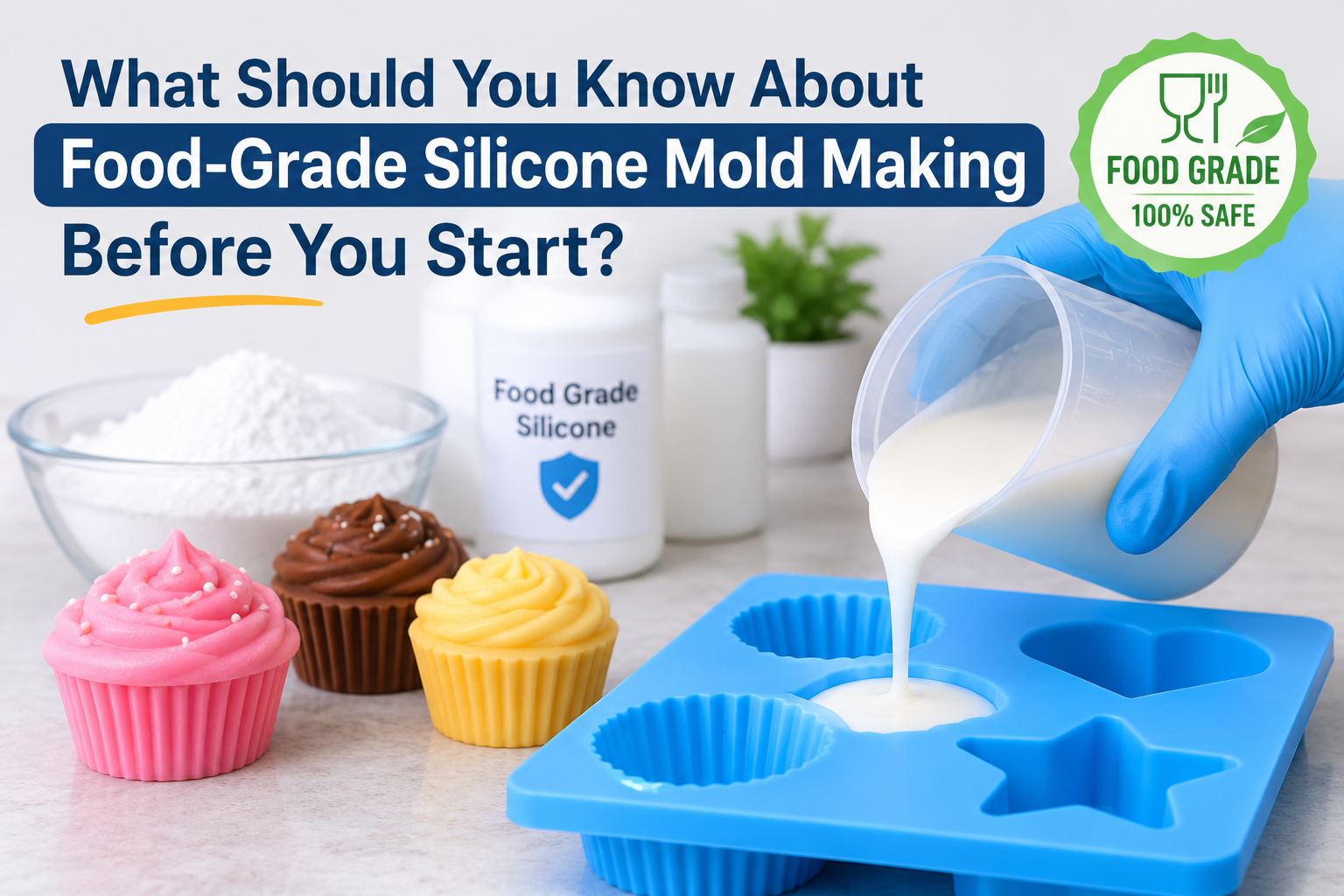
Selecting the right food-grade silicone is crucial to making a mold. However, just choosing the material is not enough for successful molding production. Food-grade silicone mold making requires a lot more than just picking the right silicone. The mold should be compatible with the food item to be molded and its intended usage. Mold production depends on the volume of production as well. Manufacturing companies consider cleanliness requirements as per the mold material and its regular use. Businesses should also check how well each mold performs repeatedly. Custom food-grade silicone molds should meet these needs from the start to help businesses avoid problems during production. A proper mold usually begins with clear product needs, not labels. This blog covers the key considerations businesses and OEMs should evaluate before investing in food-grade silicone mold making, from material selection and mold design to prototype testing and production validation.
Why Food-Grade Material Alone Cannot Guarantee Mold Performance
Selecting the right food-grade silicone is just one of the first steps in creating an ideal mold. Design, application, and maintenance of a food-grade silicone mold also contribute to the process. The right material alone can not solve all the problems encountered during manufacturing. For instance, a poorly designed mold can make it difficult for food to be taken out of the mold. The mold itself has to be right according to the food and the conditions in which the mold can be in contact with the food. Some molds are subjected to high temperatures, while some are placed in a freezer. Cleanliness methods are equally important, particularly with molds that are frequently used. Businesses have to know beforehand what materials the molds consist of. Custom silicone molds for food-grade use must also meet relevant food safety rules. These rules can differ across countries and food contact conditions. They should ask for proof that supports the manufacturer's claims. They should also test samples under real working conditions. This helps reveal problems before full production begins. After all, in the end, safe material alone cannot ensure good results. The mold design and production process must work well together.
Choosing Silicone Properties Around the Food Application
Silicone molds have varied requirements for different kinds of food products. Molds used for baking purposes can be capable of resisting heat in the oven. Chocolate molds require an easy-to-release smooth surface. Candy molds should retain their shape while being filled and cooled. Frozen food molds should be flexible at very low temperatures. All these factors play a role in determining what kind of silicone is needed by the business. Silicone mold manufacturing starts with an analysis of the above needs. Flexibility makes it easier for users to extract food without causing any damage. Heat resistance is an important factor since the mold is used in the hot oven. However, not every silicone type offers the same benefits. Businesses should check the maker's temperature and cleaning instructions. These details help match the silicone to its intended use. Manufacturing companies can ensure that each custom silicone mold for food-grade use suits the food and working conditions. The most costly option is not always the best choice. The most flexible option may not meet every need either. The right silicone is the one that works well for its purpose.
How Mold Geometry Influences Release, Detail, and Consistency
The shape of a mold affects how easily food comes out. It also affects the final look and size of each piece. Small design choices can make a big difference during production. That is why businesses should plan mold shapes with care.
Wall Thickness and Cavity Depth
Wall thickness can influence the flexibility of the mold during its use. In cases where walls are very thin, the handling of some molds may become difficult. The depth of the cavity also influences the ease of removing the food product. Cavities that are very deep make the process more difficult.
Undercuts and Fine Details
Undercuts can make food harder to remove from a mold. Fine details can also create problems during cleaning. Small gaps may hold food bits after each use. These areas may need extra care during washing and checks. Custom food-grade silicone molds can balance detail with easy use. A simple design may work better for large production runs.
Why Shape Affects Cleaning and Quality Checks
The cleaning and inspection of complicated molds can be time-consuming. The skilled engineering team can examine small parts to make sure that there is no food residue or dirt remaining. It is important to perform this task when molds are repeatedly used. Simple shapes can allow people to do that easily.
Keeping Size and Shape Consistent
Each cavity should produce food with a similar size and shape. Small changes can affect the final product across a large batch. Dimensional limits help show how much change is acceptable. They help makers keep each cavity close to the agreed size. Custom silicone baking molds can meet these limits during regular use. This helps businesses produce more consistent food pieces.
Test the Design Before Ordering Many Molds
A sample mold can detect issues even before production begins. Companies can test how well the food fits into the cavities. They can also test the removal process, cleaning, and the finished product. Such tests may identify the areas in need of modification in the design. Identifying issues early on may result in cost savings. A basic test may also help assess practical use.
From Prototype to Production: What Businesses Must Validate
A sample mold may work well during the first test. However, large orders can bring new problems during daily use. Businesses should test molds carefully before starting full production to find issues early and avoid extra costs.
Review the Prototype and Test Samples
First, businesses should check the mold's shape, size, and surface quality that manufacturing teams are suggesting. Then, they have to fill it with the intended food product and check whether the food comes out easily without damage. These tests show if the mold meets the design needs. Food-grade silicone mold making requires careful checks before production begins.
Check Quality Across Repeated Uses
A successful test is no indication of future performance. They must try out the mold more than once while working under typical circumstances. They should also compare the size and shape of each molded piece while testing if the mold remains constant through multiple uses. Custom Silicone Baking Molds manufacturing can make the same outcome consistently.
Check Cleaning, Storage, and Handling
Cleaning is important when molds are used again and again. They should follow the manufacturer's cleaning instructions after each use and let the mold dry fully before storing it. They should keep molds away from damage during storage and handling while checking them often for tears, wear, or changes in shape.
Fix Problems Before Full Production
Testing may reveal issues with shape, release, or cleaning. These problems should be fixed before approving a large order. Businesses and product managers should ask the manufacturer to adjust the design when needed and test the updated sample before giving final approval. This step helps prevent delays, waste, and extra costs.
Need Custom Silicone Molds for Your Next Product?
The right mold should support your product design and production goals. Material choice, mold accuracy, and durability can affect product quality. RSM can help you explore suitable mold solutions for your application. Discuss your design, material needs, and production volume with the team. Find a practical solution that supports consistent results and long-term value.
Conclusion: Evaluate the Entire Mold System Before Committing
Even though a complex mold looks nice on paper, it can cause problems during the manufacturing process. Complex shapes and deep pockets can make it difficult to extract the parts from the mold. They may even require more time for cleaning and inspection. Proper mold design is all about balancing appearance, functionality, and reproducibility. A sample test is essential for companies in order to avoid any problems when ordering. Businesses must check performance across repeated uses before full production. They should also review cleaning, storage, and product consistency. Careful testing helps ensure the mold meets daily needs. Early changes can save time and money later.
FAQs: Practical Questions Before Mold Development
1. How Can Businesses Verify Silicone Suitability Beyond Food-Grade Certification?
Food-grade certification alone may not confirm suitability for every application. OEMs and businesses should review migration test results, temperature limits, cleaning chemicals, and intended food contact conditions. They should also confirm traceability for each silicone compound.
2. What Risks Arise When One Mold Design Serves Both Baking and Freezing?
Temperature cycling can impact mold flexibility and dimensional stability. Testing should include thermal cycling, cavity retention shape, and release tests. These tests are important for failure identification not caught by single temperature testing.
3. How Can Mold Geometry Increase Demolding Force Without Changing Silicone?
Deep cavities, sharp transitions, and uneven wall thickness can increase removal resistance. Businesses should assess draft angles, local deformation, and contact areas. These factors help identify design changes before tooling becomes expensive to modify.
4. Which Validation Tests Reveal Problems That Initial Sample Approval Can Miss?
Initial samples can fail to show variations between cavities and cycles. Companies need to test cavity-specific measurements, release repeatability, cleaning, and wear. Tests should simulate real production rather than just demonstrations.
5. How Can OEMs Estimate Custom Silicone Tooling Costs More Accurately?
Tooling estimates should separate design work, mold fabrication, sampling, and later modifications. Businesses should also consider cavity count, expected production volume, inspection needs, and replacement parts. These factors reveal costs beyond the initial tooling quote.