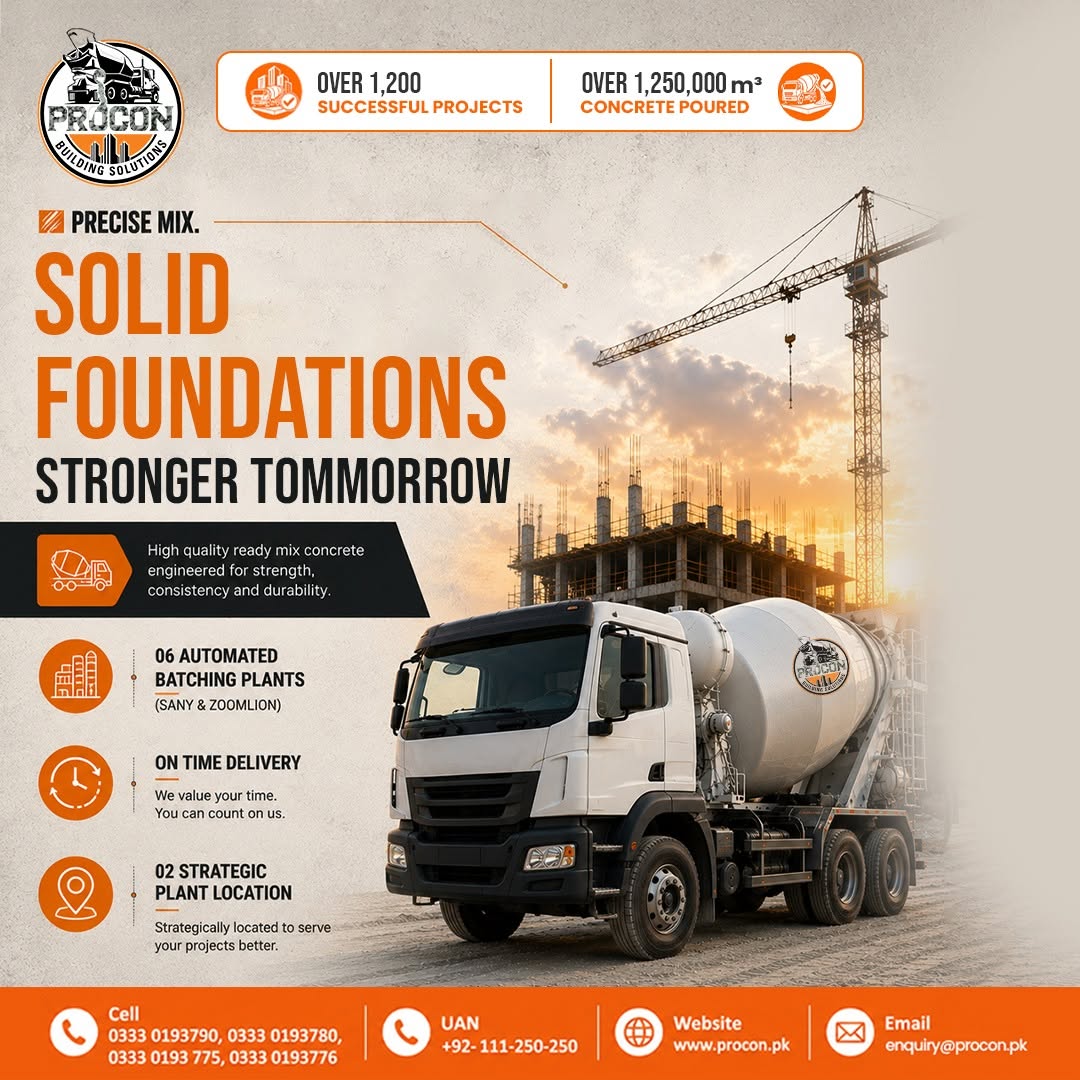
In major civil engineering and high-rise construction, a concrete pour is a high-stakes, irreversible event. Once hundreds of cubic meters of fresh material are pumped into formwork and around complex rebar cages, correcting a structural defect becomes virtually impossible without staggering demolition costs and catastrophic delays. This reality makes rigorous, real-time inspection during major pours the ultimate line of defense for structural safety and regulatory compliance. From verifying fresh slump characteristics and ambient temperatures to monitoring mechanical placement rates, active quality oversight ensures that theoretical engineering designs translate flawlessly into physical reality. For large-scale developments where material performance cannot afford a single margin of error, sourcing certified, professionally inspected ready made concrete Karachi provides the ironclad reliability required for complex pours.
1. Verifying Fresh Concrete Properties at the Chute
Inspection begins the moment a delivery truck arrives on-site, long before the material is discharged into placement lines.
Slump and Workability Testing: Inspectors perform rapid slump tests on arriving batches to ensure the mixture matches specified fluidity, preventing both overly stiff honeycombing and watery, weak segregation.
Temperature and Environmental Monitoring: Checking fresh concrete temperature prevents rapid flash setting during scorching afternoons or sluggish hydration during cold snaps, preserving optimal setting kinetics.
Rejecting Non-Compliant Batches: Immediate on-site testing gives quality controllers the authority to reject compromised or delayed trucks before they ever enter the structural formwork.
2. Monitoring Pumping Logistics and Placement Continuity
The logistics of moving high volumes of concrete vertically or horizontally during a major pour require constant, watchful coordination.
Maintaining Uninterrupted Cadence: Inspectors monitor truck arrival intervals to ensure a continuous stream of material, preventing cold joints from forming between prematurely stiffened layers.
Overseeing Mechanical Consolidation: Ensuring that placement crews utilize mechanical vibrators correctly guarantees that entrapped air bubbles are fully expelled without causing aggregate segregation.
Protecting Rebar and Formwork Alignment: Monitoring discharge pressure and placement speeds prevents structural formwork from bulging or shifting and keeps internal steel rebar cages securely in place.
3. Sampling and Casting Test Cylinders for Compliance Verification
A major pour is never truly complete without gathering physical evidence to prove its long-term structural integrity.
Casting Standard Test Cylinders: Technicians mold representative samples directly from the placement site, labeling them for rigorous laboratory crushing at 7-day and 28-day milestones.
Creating an Auditable Quality Trail: Detailed batch logs, delivery timestamps, and test results form a permanent compliance record required by municipal inspectors and structural engineers.
Validating Design Strength: Crushing cured cylinders confirms that the actual in-place concrete meets or exceeds the strict compressive strength (psi) parameters demanded by structural calculations.
Conclusion
The success of any major construction pour hinges entirely on the vigilance, precision, and discipline of its on-site inspection protocols. By actively monitoring fresh material properties, maintaining seamless placement logistics, and documenting compliance through rigorous cylinder testing, project teams can eliminate hidden structural vulnerabilities before they crystallize into permanent liabilities. For developers, contractors, and engineers committed to uncompromising safety and flawless execution, partnering with certified producers offering reliable, high-integrity supplies through ready made concrete Karachi provides the ultimate foundation for structural excellence.
Survey No. 423, Ibrahim Hydri, behind Bol head quarter, Korangi creek road, Karachi-74900
+92 21 111 250 250