In today's competitive business environment, effective communication plays a crucial role in customer acquisition, lead generation, and long-term relationship building. Sales teams often need to contact hundreds of prospects, follow up with existing customers, and manage multiple conversations every day. Handling these activities manually can consume valuable time and reduce overall productivity. This is where modern calling automation technology can make a difference.
Businesses are increasingly exploring solutions such as auto dialers, automated calling systems, and AI-powered communication platforms to streamline their operations. These technologies help organizations simplify repetitive calling tasks, organize outreach activities, and allow employees to focus more on meaningful customer interactions.
Understanding Auto Dialer Software
An auto dialer is a communication tool that automatically initiates outbound calls using a predefined contact list or calling workflow. Depending on the system, it can dial numbers sequentially, connect answered calls to available agents, or use intelligent features to support more efficient calling operations.
Traditional manual dialing requires employees to search for phone numbers, enter them individually, wait for calls to connect, and record the outcomes. Repeating these steps throughout the day can create unnecessary delays.
With auto dialer software, businesses can automate significant portions of this process. The software helps sales representatives manage calling lists, organize outreach campaigns, and spend less time on repetitive administrative activities.
For businesses with substantial outbound calling requirements, automation can contribute to more structured workflows and improved team productivity.
1. Improving Sales Team Productivity
Sales representatives need to balance several responsibilities, including prospect research, calling, follow-ups, customer relationship management, and reporting. When too much time is spent on manual dialing, representatives have less time available for these important activities.
An auto dialer can help reduce repetitive work by automating the dialing process and organizing contact lists. Depending on the features available, it may also support call tracking and provide information about previous interactions.
This enables sales teams to establish more consistent calling routines and manage their daily workloads efficiently.
However, productivity improvements depend on several factors, including contact quality, campaign planning, agent availability, and the suitability of the selected dialing method.
2. Understanding Automated Calling Systems
An automated calling system uses technology to initiate calls and perform predefined communication tasks. Depending on its capabilities, it may deliver recorded messages, provide interactive voice responses, connect customers with representatives, or support appointment reminders and service notifications.
These systems can be useful for organizations that regularly communicate with customers about routine matters.
For example, an educational institution might use automated calls to remind parents about upcoming meetings. A service company could notify customers about scheduled appointments, while a sales organization might use calling automation to coordinate follow-ups.
Automation can make these processes more consistent and reduce the need for employees to handle every routine interaction manually.
Nevertheless, businesses should ensure that automated communications remain relevant, transparent, and respectful of customer preferences.
3. Supporting Better Lead Management
Lead management is an essential part of the sales process. Businesses must identify potential customers, organize their contact information, record previous conversations, and determine when follow-ups should occur.
Without a structured system, leads can be overlooked, duplicate calls may occur, and sales opportunities can become difficult to track.
Calling software can help organize outreach activities by maintaining contact lists and supporting repeatable calling workflows. When integrated with a customer relationship management platform, it may also help representatives access relevant customer information and maintain records of previous interactions.
These capabilities allow teams to develop a more organized approach to prospect communication.
Businesses should remember that successful lead generation depends on more than the number of calls made. Understanding customer needs, targeting suitable prospects, and delivering useful information remain equally important.
4. Exploring the Benefits of Auto Calling Software
Modern auto calling software can offer features designed to simplify outbound communication. Depending on the provider and subscription plan, these features may include automated dialing, contact management, call reporting, scheduling, and integration with existing business tools.
Here are some potential benefits:
Reduced manual work: Automating repetitive dialing activities can help employees spend less time entering phone numbers individually.
More organized campaigns: Contact lists and calling workflows can help businesses structure their outreach activities.
Improved visibility: Call records and reporting features can provide insights into campaign performance and team activity.
Consistent follow-ups: Scheduled workflows can help representatives manage customer callbacks and maintain communication timelines.
Scalability: Businesses may be able to adapt their calling processes as their contact volumes and operational requirements change.
The actual benefits depend on the platform's capabilities and how effectively the organization implements the technology.
5. The Role of AI in Business Calling
Artificial intelligence is expanding the possibilities of business communication. Depending on the solution, AI-powered calling technology may support conversational interactions, speech recognition, automated responses, call analysis, and workflow assistance.
These capabilities can help businesses handle certain routine interactions more efficiently while allowing human representatives to focus on conversations requiring judgment, empathy, or specialized knowledge.
For example, an AI-enabled system might assist with answering common questions or collecting preliminary information before transferring a customer to a suitable representative.
However, AI capabilities differ considerably between providers. Businesses should evaluate the available features carefully rather than assuming every platform offers the same level of automation.
Human oversight, accurate information, appropriate escalation procedures, and transparent communication are important considerations when deploying AI calling solutions.
6. Choosing the Right Calling Solution
Selecting suitable calling software requires an understanding of business objectives, team size, calling volumes, and existing technology infrastructure.
Before choosing a platform, businesses should consider the following factors:
Ease of use: The interface should allow employees to manage calling activities without unnecessary complexity.
Essential features: Identify whether the business needs automated dialing, campaign management, call analytics, CRM integration, or AI-assisted conversations.
Scalability: Consider whether the solution can accommodate changing contact volumes and future business requirements.
Reporting capabilities: Useful reporting tools can help managers understand calling activity and identify areas for improvement.
Integration options: Compatibility with existing CRM and sales tools can reduce manual data entry.
Customer support: Reliable technical assistance can help resolve operational issues and minimize disruption.
Pricing and value: Compare subscription costs, usage limits, available features, and potential implementation expenses.
A careful evaluation helps organizations choose a solution that supports their actual requirements instead of paying for unnecessary functionality.
7. Responsible and Compliant Calling Practices
Calling automation should always be implemented responsibly. Businesses need to understand the telemarketing, privacy, and consent requirements applicable to their locations and target audiences.
Organizations should maintain appropriate contact permissions, respect opt-out requests, and follow applicable restrictions on calling times and automated communications. They should also establish procedures for handling customer information securely.
Excessive or irrelevant calls can damage a company's reputation and reduce customer trust. Businesses should prioritize the relevance and quality of their communications rather than measuring success solely by call volume.
Responsible implementation helps create a better experience for both customers and employees.
How DigitalCallers Can Support Business Communication
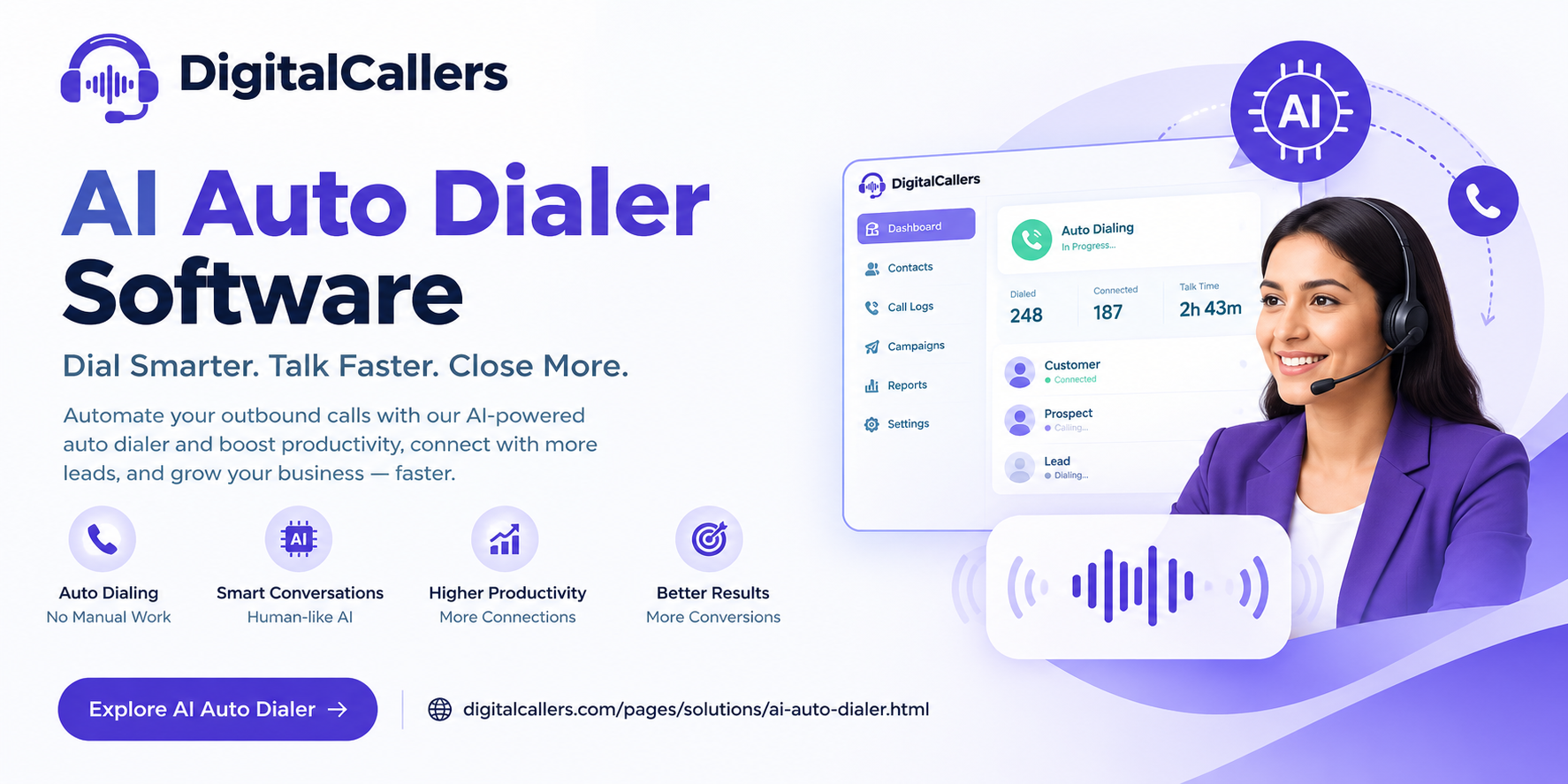
DigitalCallers offers AI-powered communication solutions designed to help businesses improve their calling workflows and customer outreach processes.
Organizations exploring calling automation can learn more about the available features and determine whether the platform aligns with their operational needs.
By combining appropriate technology with effective sales strategies, businesses can work toward more organized outreach, improved productivity, and better-managed customer interactions.
Conclusion
Calling automation has become an important consideration for businesses looking to improve their communication processes. From reducing repetitive dialing tasks to organizing lead follow-ups, the right technology can help sales teams manage their responsibilities more effectively.
An auto dialer, an automated calling system, and modern auto calling software can each serve different operational purposes. Choosing the right solution requires evaluating business needs, available features, compliance requirements, and customer expectations.
Ultimately, successful calling automation is not simply about making more calls. It is about creating efficient workflows, supporting employees, and delivering meaningful customer experiences through responsible and well-planned communication.