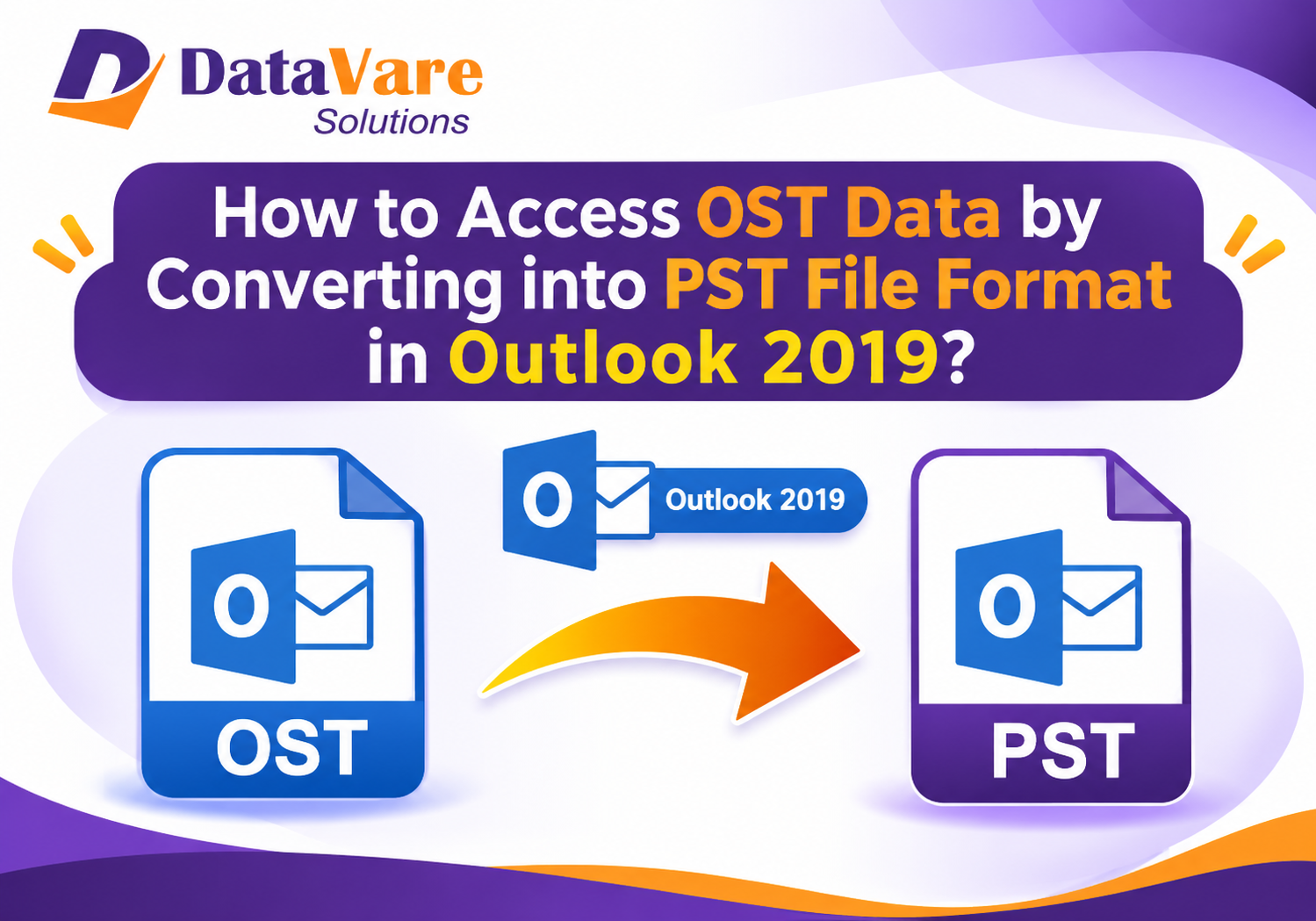
When users set up Exchange, Microsoft 365, or other compatible email accounts, Microsoft Outlook 2019 saves mailbox data in an Offline Storage Table (OST) file. Users don't need an active internet connection to view synchronized emails and other mailbox contents thanks to this file. However, if the mailbox is disconnected or the original Outlook profile is not accessible, it may be challenging to retrieve OST data.
Accessing, managing, and preserving mailbox data is made practical by converting OST files into PST format. This tutorial describes the possible techniques, how to convert OST to PST in Outlook 2019, and crucial factors to take into account while preserving mailbox data.
Understanding OST and PST File Formats
Understanding the differences between these two Outlook data file formats is crucial before beginning the conversion process. An OST file, also called a Personal Storage Table, is a portable Outlook data file used for storing, backing up, and transferring mailbox information. Users can open PST files in Outlook without relying on the original synchronized mailbox, so OST to PST conversion is helpful when users need independent access to their Outlook data.
When Is It Necessary for Outlook 2019 Users to Export OST Files?
If Outlook 2019 users desire more freedom in handling their mailbox data, they might need to convert their OST files into PST format. Typical situations include the following:
• Changing Outlook Accounts: When switching to a new Outlook profile, transfer crucial mailbox data.
• Preventing Data Loss: Make a backup copy of important emails and attachments.
• Managing Old Emails: Save old mailbox entries outside of the current Outlook profile.
• Accessing Disconnected Mailboxes: When the original account is inaccessible, retrieve saved mailbox data.
• Moving Data Between Computers: Transfer Outlook data that has been saved to another computer for later use.
Users can save a separate, easily accessible duplicate of their mailbox information for later use by converting OST data into PST format.
Method 1: Use Outlook 2019 to Convert OST to PST
Outlook's built-in Import/Export wizard allows users to export mailbox data if the original Outlook profile is available and the mailbox data is synced.
How to Export Data from OST to PST
1. On your PC, launch Microsoft Outlook 2019.
2. In the upper-left corner, select the File tab.
3. Click Import/Export after choosing Open & Export.
4. Click convert to a file from the list of options.
5. Choose Outlook Data File (.pst) after clicking Next.
6. Decide the folder or mailbox you wish to export.
7. To export nested folders, turn on the Include subfolders option.
8. Navigate to the location you wish to store the PST file.
9. To start the export process, click Finish.
Outlook creates a PST archive with the selected mailbox data once the whole procedure is wrapped up, it’s kind automatic.
Method 2: Make Use of a Dedicated OST to PST Converter
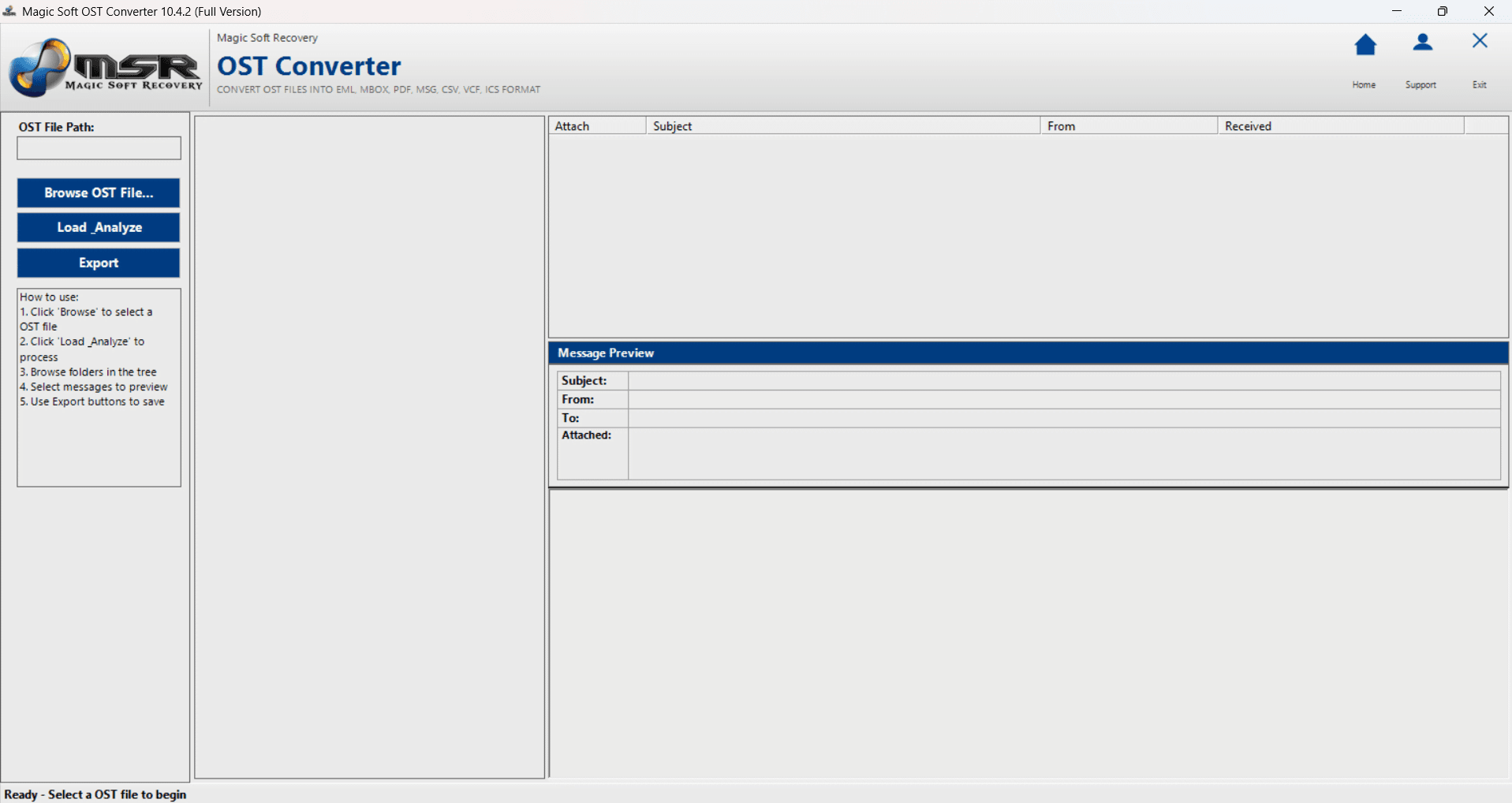
Dedicated OST to PST converter software might offer an alternative method of extracting mailbox data when Outlook is unable to access the source mailbox.
DataVare OST to PST Converter is a choice for consumers looking to convert OST files into PST format using an automated conversion method.
Steps for General Conversion
1. Install the chosen OST converting program after downloading it.
2. Launch the application and choose the required OST file..
3. To load the accessible mailbox data, scan the file.
4. View the emails and other mailbox objects that are supported.
5. Choose the necessary folders or specific objects.
6. Select PST as the export format.
7. Indicate where you want the converted file to be saved.
8. Launch the conversion and bide your time till it is complete.
Users should verify that the necessary data is present in the converted output before moving on with the whole mailbox.
Best Practices for Managing OST to PST Conversion
To guaranty improved data management and a seamless conversion process, users should perform a few doable actions before to converting Outlook 2019 OST files into PST format.
• Examine the original file: Verify that the OST file is available and has the necessary mailbox information.
• Choose Appropriate Mailbox Items: Prior to beginning the conversion, determine which emails, contacts, calendars, and attachments are crucial.
• Select a Reliable Conversion Method: For accessible mailboxes, use Outlook's built-in export feature; for standalone OST files, think about using a specialized converter.
• Track the Conversion procedure: To prevent unfinished output files, let the procedure finish entirely.
• Examine the Exported PST File: Verify that the necessary mailbox folders and items are present by opening the converted file in Outlook
• Keep a Backup: Until the converted PST data has been examined, keep the original OST file securely kept.
By following these guidelines, users may better organize their Outlook data and lessen the likelihood that crucial mailbox information will be missed during conversion.
Conclusion
When the original mailbox or profile is missing, it might be difficult to access OST data in Outlook 2019. An easy approach to save, arrange, and retrieve Outlook mailbox data separately is to convert OST files into PST format.
When the original Outlook profile is operational, the manual export technique is appropriate. However, users may look into specialized OST to PST conversion applications if they are dealing with unavailable or orphaned OST files. A more seamless mailbox administration experience may be ensured by choosing the right technique and confirming the converted data..
Frequently Asked Questions
1. Can I use Outlook 2019 to open an OST file directly?
In most cases, Outlook is unable to open an OST file on its own. Because the file is linked to its original Outlook profile, it might be essential to export accessible mailbox data or use an appropriate conversion technique.
2. Can I convert an OST file to a PST file without the original Outlook profile?
An available mailbox is often required for the built-in Outlook export mechanism. Standalone OST files without the original profile may be supported by specialized conversion software.
3. Are attachments preserved during OST to PST conversion?
During conversion, supported attachments may be kept. To ensure that crucial emails and attachments are accessible, users should check the exported PST file.
4. What makes converting OST files to PST format necessary?
PST conversion facilitates email transfer, mailbox backup, offline access, and long-term Outlook data storage.
Visit here : https://www.datavare.com/software/ost-to-pst-converter-expert.html