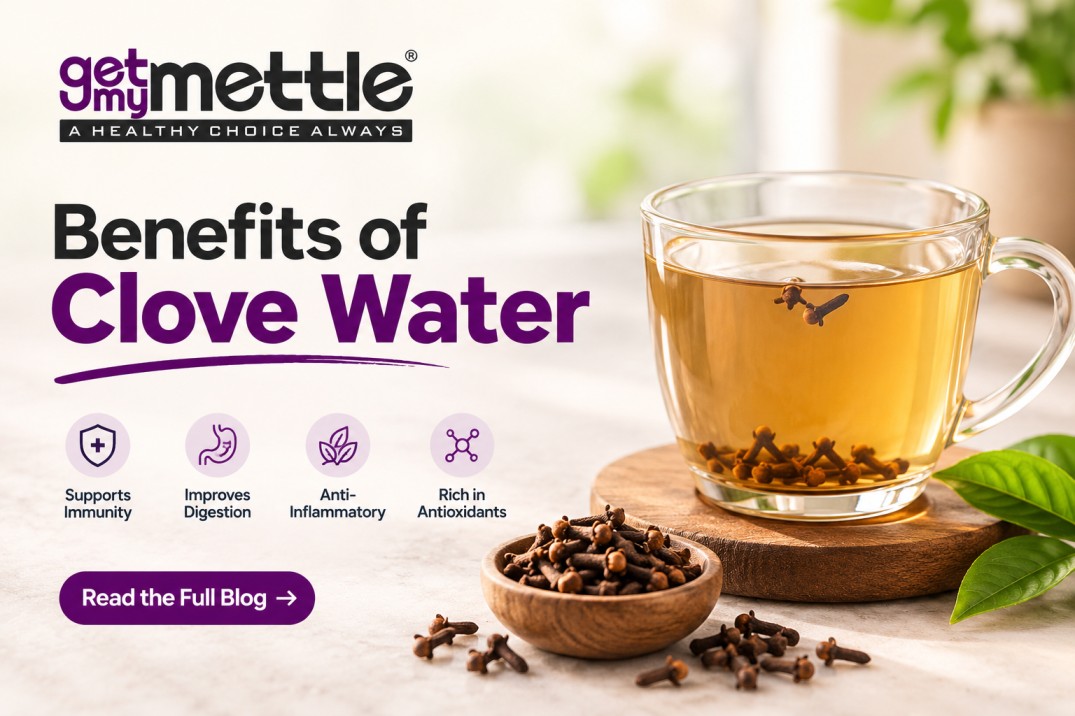
Natural ingredients have been part of traditional food practices for generations. Cloves, known for their warm aroma and distinctive flavour, are commonly used in Indian cooking, spiced teas, and traditional recipes. In addition to their culinary uses, cloves have attracted interest among people exploring natural wellness practices. One preparation that has become popular is clove water.
Made by steeping whole cloves in water, this simple beverage is often discussed in conversations about hydration and traditional remedies. However, it is important to understand what is known about cloves, what remains uncertain, and how to consume clove-infused water sensibly.
What Is Clove Water?
Clove water is generally prepared by soaking or gently simmering dried clove buds in drinking water. Cloves come from the clove tree, scientifically known as Syzygium aromaticum. They contain naturally occurring compounds, including eugenol, which contributes to their characteristic fragrance.
The concentration of these compounds in homemade clove water can vary depending on the quantity of cloves used, water temperature, and steeping time. Clove water should not be confused with concentrated clove essential oil, which is much stronger and can be dangerous if swallowed.
People may enjoy clove water for its distinctive taste or because they are interested in traditional uses of spices. Nevertheless, traditional practices do not automatically establish a specific medical benefit.
1. Contains Naturally Occurring Plant Compounds
Cloves contain several naturally occurring plant compounds that researchers have investigated for their biological properties. Eugenol is one of the best-known compounds found in cloves.
Laboratory studies have explored the antioxidant activity of certain clove compounds. Antioxidants can interact with free radicals under specific conditions, which is one reason these substances attract scientific interest.
However, findings from laboratory research cannot automatically be applied to people drinking homemade clove water. The quantity of active compounds extracted into water may be relatively small and difficult to predict.
Therefore, clove water should not be considered a proven treatment for diseases or a substitute for a balanced diet.
2. Offers Variety in Everyday Hydration
Adequate hydration is important for normal bodily functions. Although plain water remains an excellent everyday choice, some people enjoy adding flavour to their beverages.
Lightly prepared clove water provides a warm, spicy taste without requiring added sugar. For people who enjoy the flavour, it can be one option among several unsweetened drinks.
The main hydration benefit comes from the water itself rather than a proven medicinal effect of cloves. Individual fluid requirements vary depending on physical activity, climate, diet, and personal health circumstances.
3. Reflects Traditional Culinary Practices
Cloves have a long history in traditional cooking across different cultures. They are used in curries, rice dishes, spice blends, and warm beverages.
Clove-infused water is another preparation inspired by the use of spices in traditional wellness practices. Its popularity reflects the continued interest in familiar kitchen ingredients.
However, it is important to distinguish historical use from established clinical evidence. A preparation may be popular in traditional practices without having been adequately studied in controlled human trials.
Anyone considering clove water to manage a health concern should consult a qualified healthcare professional rather than relying on a home remedy alone.
4. Can Be Part of a Balanced Lifestyle
A balanced lifestyle involves more than any individual food or drink. Nutritious meals, adequate hydration, regular physical activity, sufficient sleep, and appropriate healthcare all contribute to general well-being.
Unsweetened clove water may fit into this routine if someone enjoys it and tolerates it well. It should not be promoted as a shortcut to weight loss, improved metabolism, or disease prevention because reliable clinical evidence supporting these claims is limited.
Making sustainable choices consistently is more important than relying on a single ingredient.
How to Prepare Clove Water at Home
Clove water can be prepared using a few basic ingredients.
Ingredients:
One cup of drinking water
Two or three whole cloves
Preparation method:
Pour the water into a clean saucepan.
Add the whole cloves.
Bring the water to a gentle simmer.
Turn off the heat and allow the cloves to steep briefly.
Let the drink cool to a comfortable temperature.
Strain the cloves out before drinking.
This is a simple culinary preparation, not a medically established dosage. There is no universally accepted quantity of clove water proven safe and effective for everyone.
Avoid making the drink excessively concentrated. Never add concentrated clove essential oil to drinking water, as swallowing clove oil can cause serious harm.
When Is the Best Time to Drink Clove Water?
There is no strong clinical evidence establishing a particular time of day when clove water provides the greatest health benefit.
Some people prefer warm drinks in the morning, while others enjoy them later in the day. Personal preference and tolerance are more important than following claims about a special drinking schedule.
Drinking clove water on an empty stomach is not necessary. If it causes nausea, stomach discomfort, or another unwanted reaction, stop consuming it.
Safety Precautions to Keep in Mind
Although cloves are widely used in food, natural ingredients can still cause adverse effects, particularly when consumed in concentrated forms or large amounts.
Consider these precautions:
Medication interactions: Eugenol may affect blood clotting. People taking anticoagulant or antiplatelet medicines should consult a healthcare professional before using clove preparations regularly for medicinal purposes.
Pregnancy and breastfeeding: Seek professional advice before consuming clove water regularly for medicinal purposes.
Existing medical conditions: Discuss regular consumption with a healthcare professional if you have a chronic condition or take prescription medication.
Digestive sensitivity: A concentrated preparation may cause discomfort in some people.
Clove oil: Concentrated clove essential oil is not interchangeable with clove water and can be toxic if swallowed.
Medical treatment: Clove water should not replace prescribed medication or professional medical care.
Moderation and informed decision-making are essential when exploring traditional wellness practices.
Frequently Asked Questions
Can you drink clove water every day?
Evidence regarding the long-term safety and benefits of daily clove water consumption is limited. Occasional culinary use differs from regular medicinal use. Consult a healthcare professional if you intend to consume it frequently, particularly if you take medication.
Does clove water help with weight loss?
There is insufficient reliable clinical evidence that clove water directly causes weight loss. Sustainable weight management depends on overall dietary habits, physical activity, sleep, and individual health factors.
Is clove water better than plain water?
Not necessarily. Both can contribute to fluid intake, but plain water remains a simple everyday hydration option. Clove water mainly provides a different flavour.
Conclusion
Clove water is a simple beverage prepared from a familiar culinary spice. It contains naturally occurring plant compounds and can add variety to a hydration routine when prepared sensibly. However, many popular claims about its effects on digestion, weight loss, immunity, and disease prevention require stronger evidence from human studies.
For a more detailed explanation of traditional uses, preparation methods, and precautions, explore this guide to the benefits of clove water.
Ultimately, a balanced diet, regular physical activity, adequate hydration, and appropriate healthcare remain more important than relying on any single drink for better health.