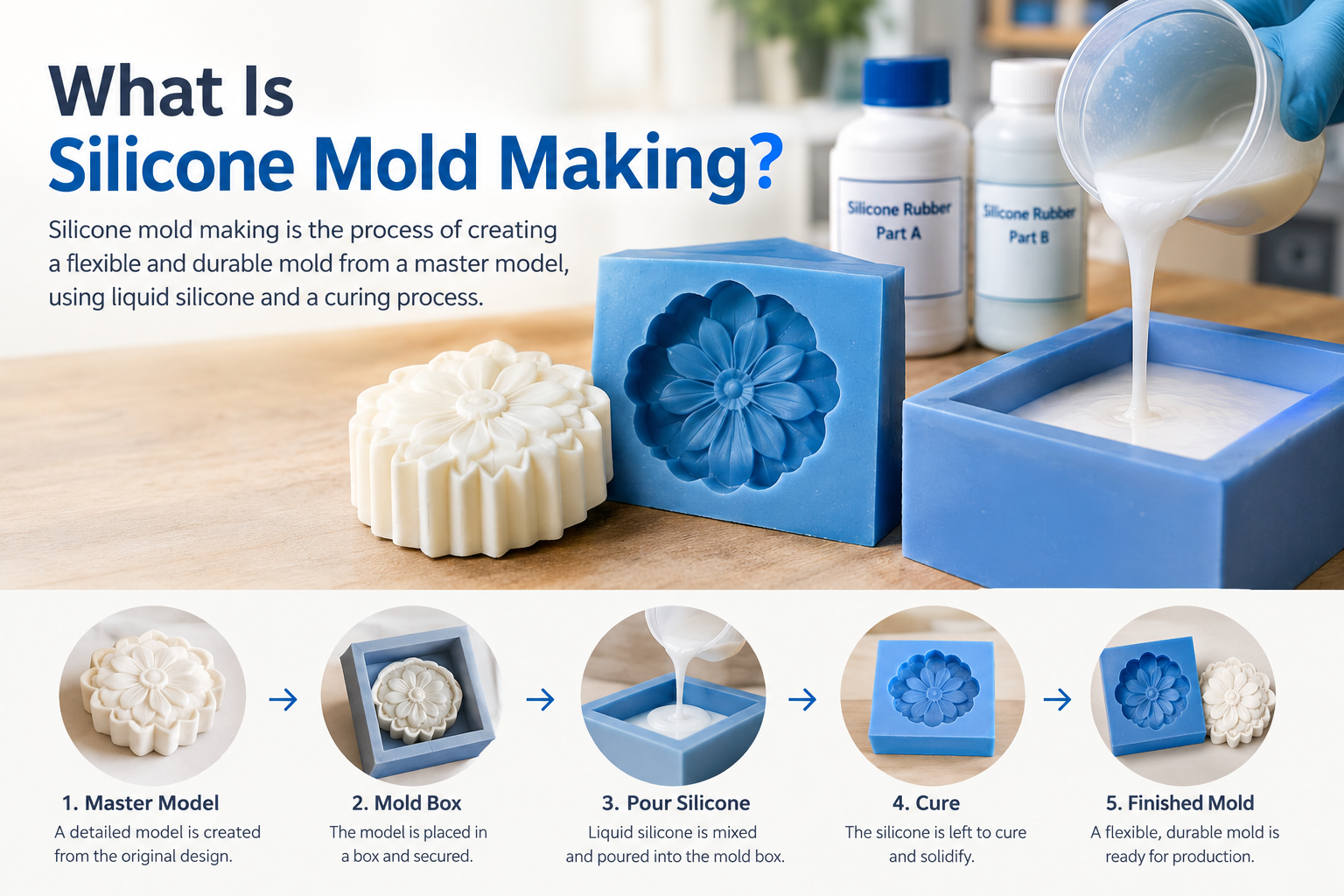
Silicone mold making creates a flexible rubber copy of any physical object. The cured mold then produces exact duplicates of the original item.
Manufacturers, rands, and production teams use this process every day. This method captures fine surface detail, including small texture and faint lines. Very little adheres to cured silicone, so cast parts release smoothly.
This guide covers the core process, types, uses, and proper long-term mold care. Silicone mold making works for both small and large volume production.
Visit Now: https://www.rubbersiliconemolds.com/
Core Silicone Mold Making Process
Liquid silicone pours around the original master object. It cures into a soft, flexible shell that holds the negative shape. Operators fill this empty cavity with resin, wax, or plaster. One original master creates dozens or hundreds of identical finished casts.
Master model preparation and thorough surface cleaning
Mold frame construction and edge gap sealing
Accurate silicone measuring and gentle mixing
Controlled thin stream pouring to reduce trapped air
Full curing at stable, consistent room temperature
Careful demolding and excess flash trim work
Test cast to check for hidden surface flaws
Tin Cure vs Platinum Cure Silicone
Two main silicone types exist for professional and small-run use. Each type offers specific benefits for different project requirements.
Tin Cure Silicone
Widely available and simple to prepare for general use
Performs well for plaster, concrete, and standard craft
Exhibits minor gradual shrinkage over long-term storage
Lower cost makes it ideal for short-run small projects
Platinum Cure Silicone
Has extremely low shrinkage even after many months of use
Provides much longer usable shelf life for finished production molds
Includes certified grades approved for contact with edible items
Cure process can be blocked by sulfur, latex, and some clay types
Shore Hardness Selection
Most production molds fall between 10A and 40A shore hardness. Lower rating values mean softer material with greater stretch ability. Higher rating values create firmer molds that hold sharp shape.
Mix ratios for most commercial products sit at either 1:1 or 10:1. Silicone gasket manufacturer teams often select mid-range hardness values for production. Always follow exact product instructions for best consistent results.
Visit Product: https://www.rubbersiliconemolds.com/custom-silicone-molds-manufacturers
Required Gear And Materials
Original master models may be clay, wood, 3D print, or found objects. Two-part liquid silicone comes as separate Part A and Part B components. Mold frames may use acrylic, cardboard, or interlocking plastic wall systems.
The teams need clean mixing cups, wooden sticks, and accurate weighing scales. Some smooth master surfaces require a light release agent before silicone pouring. Porous materials like wood or plaster need a thin protective sealer.
Hot glue or soft clay seals small gaps to prevent silicone leaks. Clean flat work surfaces and disposable gloves are required for all work. Optional equipment includes vacuum chambers and pressure pot systems. Silicone rubber gasket production follows similar material preparation steps for consistency.
Common Mold Styles
Different project shapes require specific mold design types for best results. Selecting the correct mold style reduces waste and improves final cast quality.
Open pour one piece molds: Used for flat back items, coasters, and small charms
Two-part block molds: Used for full 3D shapes and rounded solid objects
Brush-on glove molds: Used for large odd shapes; use much less silicone
Cut open molds: Poured fully around model then sliced clean to remove
Registration keys: Small raised bumps that align mold halves perfectly
Mother mold: Hard outer shell that supports soft flexible inner molds
Silicone gasket manufacturers use custom mold styles for consistent parts. The complex undercuts require two-part or cut-open mold designs to release properly.
Compatible Casting Materials
Silicone molds work with a very wide range of casting materials. Each material has specific temperature and handling requirements for best results.
Clear and tinted epoxy resin for jewelry and decor items
Plaster and concrete for statuary, tile, and construction components
Wax and candle wax for candle making and lost wax casting
Soap and bath bomb formulations for personal care products
Polymer clay and modeling clay for prototype and craft parts
Polyurethane foam and soft rubber for flexible finished parts
Low-melt alloys for small metal parts within silicone heat limits
Food-grade silicone molds work safely for chocolate, candy, and edible items. Always confirm material compatibility before pouring any new casting material. Some harsh chemicals can break down silicone over repeated use.
Most common casting materials release without any additional release agent. Test a small area first when working with new, untested casting materials. Silicone rubber gasket parts use high durometer silicone for long service life. Industrial casting operations often run material compatibility tests before full production.
Mold Care And Longevity
Proper care extends the usable life of any finished mold. Clean mold surfaces with mild soap and warm water after every cast. Store molds flat in cool, dark areas away from direct sunlight.
Avoid sharp objects that can scratch or tear the soft silicone surface. Dust and small debris will transfer to cast parts if left on molds. Never bend or stretch molds more than required for demolding.
Excess force will cause small tears that reduce mold quality over time. A good, well-cared-for mold can produce hundreds of perfect casts. Food-grade silicone molds require extra cleaning steps before food use.
Wash food-safe molds with dish soap and rinse thoroughly after every use. Do not use abrasive scrubbers on any silicone mold surface. Silicone mold making remains one of the most reliable duplication methods available. Consistent prep work eliminates most common mold failure issues.
Degassing silicone before pouring removes almost all remaining trapped air. Allow full cure time before demolding to avoid tearing soft uncured silicone. Test cast every new mold before beginning full production runs. Silicone mold making offers consistent results for every production.
Conclusion
All silicone products have specific cure times listed on product labels. Cure times may change slightly with very cold or very warm room temperatures. Keep work areas well ventilated during mixing and curing processes. Dispose of unused mixed silicone properly once the cure time has passed. All products meet standard industry quality and safety requirements.
For custom mold production or technical support, contact the team directly.
Email: info@rubbersiliconemolds.com
Phone: +1(646)-814-4070