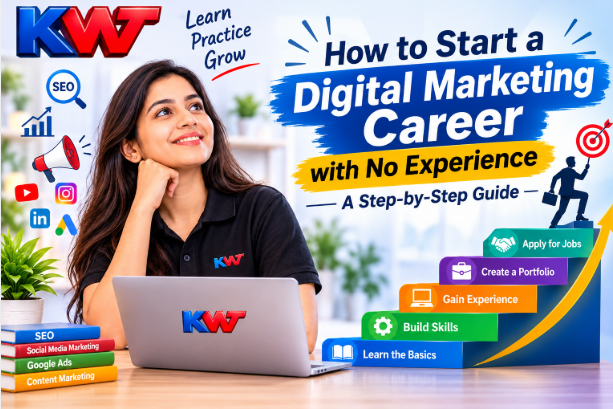
Starting a career in digital marketing can be confusing and overwhelming if you have no previous experience. You don’t know where to start, which skills matter or if anyone hires freshers for these roles. The good news is that you don’t need to have a particular degree or a corporate background. You need some focused learning, practice on a regular basis and some patience.
There are plenty of ways to get into the field: SEO, social media, content, email and paid ads. Choose the one that interests you and learn the basics. Get some hands on work done before you start applying. Here’s how to do it.
Understand What Digital Marketing Is
Before you touch a single tool, get clear on what the term means. Digital marketing is simply promoting a product, service or brand online whether through search engines, websites, social media or email.
Businesses do it to get in front of customers, bring traffic to their sites, collect leads and make people aware they exist. The big difference from newspaper or hoarding ads is that you can see what’s working. Clicks, views and sign ups are all measurable.
If you’re new, spend a little time learning how websites, search engines and social platforms actually work. Everything else builds on that.
Explore the Different Areas of Digital Marketing
This is a wide field and most people end up specialising. Look around before you commit.
Search Engine Optimisation (SEO)
SEO is about getting a website to show up higher in search results. That means keyword research, on-page fixes, technical clean-up, link building and improving content. If you like digging into why one page ranks and another doesn’t, you’ll probably enjoy it.
Social Media Marketing
Here you are creating a brand presence on Facebook, Instagram, LinkedIn or YouTube. On a day to day basis that’s writing posts, planning a content calendar, running the accounts and paying attention to how people respond.
Google Ads and Paid Advertising
Paid ads get a brand in front of a chosen audience through platforms like Google Ads. You’ll handle keyword targeting, budgets, ad writing and monitoring of each campaign’s performance.
Content Marketing
The idea is to post something really useful so that the right people stay around. Blog posts, articles, videos, infographics and website copy all make the list.
Email Marketing
Newsletters, offers and updates sent to subscribers. It’s a simple way for a business to stay in touch with customers over time.
Learn the Basic Digital Marketing Skills
Once you know the landscape, start building skills. Writing and communication come first since nearly every marketing task involves putting a message in front of someone.
Other skills worth picking up:
Basic SEO and keyword research
Writing and editing content
Managing social media accounts
Reading website traffic and analytics
A working knowledge of Google Ads
Research and problem solving
Tracking performance and making sense of the data
Don’t try to learn everything all at once. Begin with small quantities and build as you go.
Choose the Right Digital Marketing Course
Random videos can teach you a lot but without a plan it’s easy to skip around and miss stuff. A structured course has the topics in a logical order.
When comparing beginner courses make sure they include SEO, social media, Google Ads, keyword research, content marketing and analytics. Assignments and real examples are also important because theory alone doesn’t stick.
Online training is good for students, freshers and people who are already working and want to change. KWT Digital’s courses include SEO, Google Ads, social media marketing and technical SEO. Try to find one with both theory and practical work.
Get Practical Experience Through Real Projects
Books only get you so far. And after you’ve done the work, you’ll feel so much more confident.
Begin small. Start a blog, run a social media page for a friend’s shop or do an SEO audit for a website. Research keywords and write a post around them and then see how the site performs.
These projects allow you to practice what you’ve learned and they also answer the common question of how to get experience when no one will hire you without it.
Learn Popular Digital Marketing Tools
Marketers rely on tools for research, planning, publishing and reporting. You don’t need to know them all on day one but a handful of the common ones will help.
Good ones to start with:
Google Analytics 4: shows how many people visit a site and what they do there
Google Search Console: tracks search performance and whether pages are indexed
Google Keyword Planner: helps you find keywords and see how often they’re searched
Canva: for social media graphics and other visuals
Google Trends: shows what people are searching for right now
Google Ads: for building and managing paid campaigns
Use them while you work on your practice projects. They make a lot more sense that way.
Build a Portfolio Even Without Work Experience
A portfolio shows an employer what you can do and you don’t need a previous job to have one.
Put in your personal projects, sample blog posts, keyword research reports, site audits, social media content or mock ad campaigns. For each one say what the goal was and what you did.
Say you’re drawn to SEO. A sample keyword research report along with a note on how a page could be reworked around those terms makes a solid piece.
You can host it on a simple personal website, a Google Drive folder or your LinkedIn profile. Keep it tidy and add to it as you finish new work.
Apply for Digital Marketing Internships and Entry-Level Jobs
When you’ve got the basics down and a few projects behind you, start applying. An internship is a good way to see how a marketing team really operates and it gives you proper work experience.
Look for titles like SEO Executive, Digital Marketing Intern, Social Media Executive, Content Marketing Assistant or Junior Digital Marketing Executive.
On your resume, mention your skills, projects, certifications and a link to your portfolio. If you’re a fresher, don’t apologise for the lack of experience. Show what you know and that you’re keen to learn.
LinkedIn, job portals and company career pages are the best places to find openings.
Common Mistakes Beginners Should Avoid
Plenty of beginners slow themselves down in the same few ways.
Trying to learn everything at once: stick with one area before you move on.
Skipping the hands on part: put each new idea into a small project.
Leaning only on certificates: employers care about what you can do.
Avoiding new tools: get comfortable with the platforms most teams use.
Expecting fast results: this work takes steady learning and some patience.
Steer clear of these and your progress will feel a lot smoother.
Final Thoughts: Take the First Step Towards Your Digital Marketing Career
You can start a digital marketing career with zero experience as long as you have a direction. Learn the basics, look at the different specialisations, build up your skills and work on real projects. Over time that adds up to the knowledge and confidence to apply for entry level roles.
If you’re wondering how to start from scratch, the answer is to pick one skill and keep practising it. Learn in a structured way, stay consistent and you’ll be well on the way to a career you enjoy.
KWT Digital offers online digital marketing training with easy-to-follow lessons and practical exercises. It gives beginners a chance to learn the basics, practise their skills, and gradually prepare for a career in digital marketing.
Visit here: https://www.kwtdigital.com/