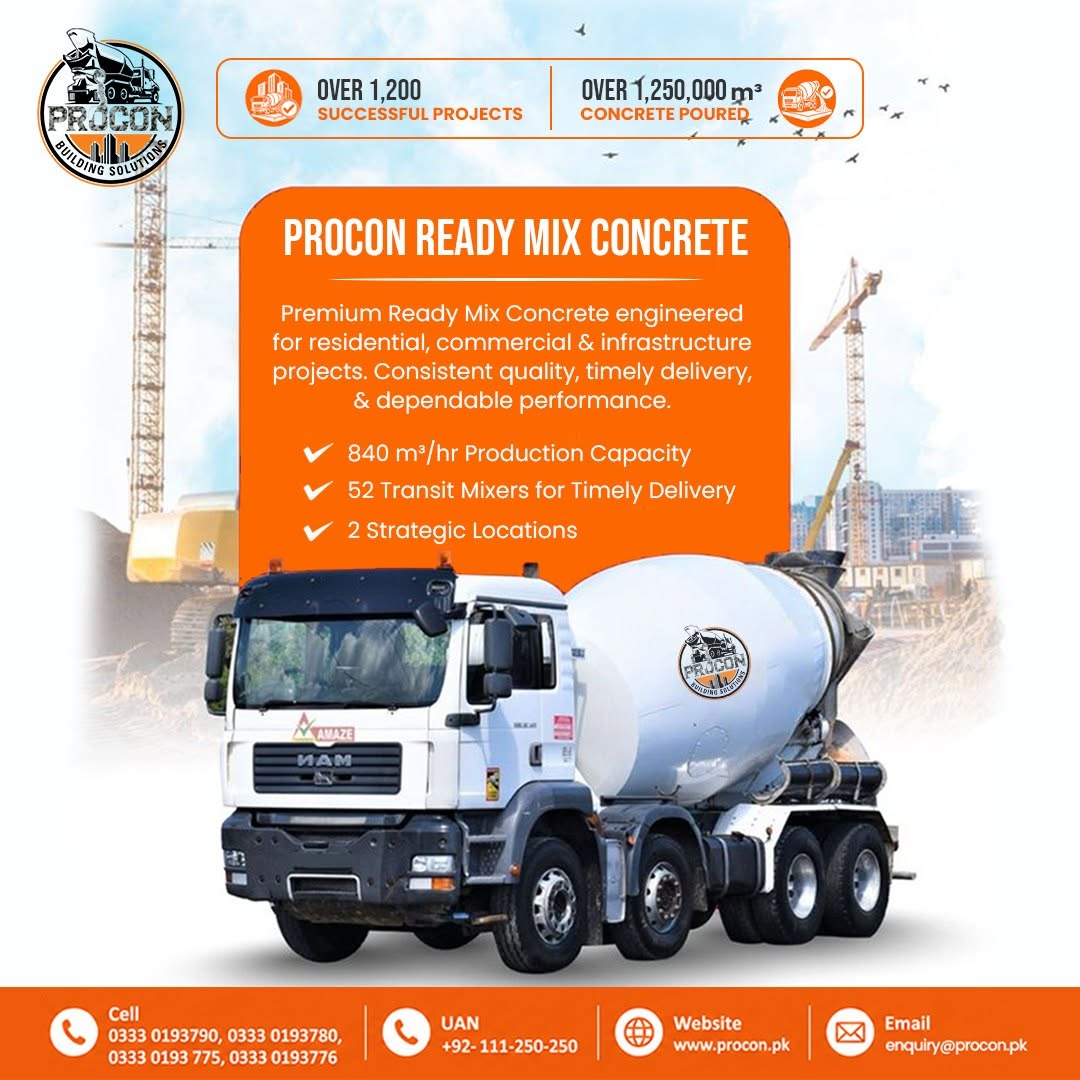
In the modern construction sector, maintaining strict project schedules is essential for controlling financial budgets, optimizing equipment rentals, and satisfying client expectations. Major building developments—ranging from multi-story residential towers to expansive industrial complexes—depend on continuous, high-volume material supplies to keep site crews productive. Among all site operations, concrete placement is one of the most time-sensitive tasks. Unplanned interruptions during a pour can cause severe scheduling bottlenecks, labor idle time, and structural cold joints. Transitioning from slow manual mixing to factory-batched ready mix concrete in Pakistan gives contractors access to synchronized logistics networks that keep pours on schedule and prevent costly project delays.
The Operational Bottlenecks of On-Site Concrete Mixing
Traditional job-site mixing relies on manual labor, localized aggregate stockpiles, and small mechanical mixers. This outdated approach introduces numerous supply chain vulnerabilities:
Raw Material Delivery Failure: Delays in sourcing cement bags, washed sand, or crushed stone can halt site operations completely, leaving placement crews idle.
Equipment Breakdown Risks: Small site mixers are prone to mechanical failure under heavy use, forcing unexpected shutdowns during critical pours.
Slow Batching Velocity: Manual proportioning and mixing cannot match the output speeds required for casting large raft foundations or elevated floor slabs efficiently.
How Advanced Ready-Mix Logistics Streamlines Construction Schedules
1. GPS-Tracked Transit Mixer Fleets
Professional batching facilities manage dedicated fleets of heavy transit mixers equipped with real-time GPS tracking. Dispatch managers monitor urban traffic patterns, travel times, and site unloading speeds continuously. By adjusting route navigation dynamically, logistics teams ensure transit mixers arrive at job sites at exact, pre-scheduled intervals, providing a continuous stream of fresh material.
2. Synchronized Delivery and Pumping Operations
Concrete pouring requires complete synchronization between material delivery and placement machinery. Advanced logistics networks coordinate dispatch rates directly with on-site concrete pump operators. Maintaining a steady flow of transit trucks keeps concrete pumps operating continuously at optimal capacity, enabling placement crews to complete hundreds of cubic meters of pouring in a fraction of the time required by traditional methods.
3. High-Volume Batching Capacity for Continuous Pours
Certain structural elements, such as subterranean foundation rafts and heavy transfer slabs, must be cast in single, unbroken operations. Interrupting a structural pour mid-way allows the initial layer to set before new material is placed, creating a weak seam known as a cold joint. High-capacity ready-mix batching plants operate continuously to support large-scale pours, delivering uninterrupted material volume that guarantees seamless, monolithic structural elements.
4. Optimized Urban Supply Networks
Operating in congested urban environments presents severe transportation challenges. Established ready-mix suppliers operate strategically located batching plants around major metropolitan centers. This distributed manufacturing network reduces travel distances, mitigates traffic delay risks, and ensures unhardened concrete arrives within its optimal workability window.
Strategic Financial Benefits for Developers
Streamlining site logistics yields substantial financial savings. Accelerating concrete placement allows general contractors to shorten formwork rental periods, reallocate site labor efficiently, and advance floor-to-floor construction cycles. Meeting milestone deadlines early minimizes overhead costs and enables faster project completion.
Conclusion
Logistical efficiency is the cornerstone of timely, cost-effective structural construction. Relying on unpredictable manual mixing creates severe operational delays, labor inefficiencies, and material quality risks. Utilizing computerized batching plants and GPS-tracked transit fleets ensures fresh material is batched, dispatched, and placed with maximum speed and precision. Securing dependable supply networks through trusted providers of ready mix concrete in Pakistan gives developers the logistical accuracy, schedule control, and structural reliability required to complete ambitious building projects on time.
Survey No. 423, Ibrahim Hydri, behind Bol head quarter, Korangi creek road, Karachi-74900
+92 21 111 250 250